



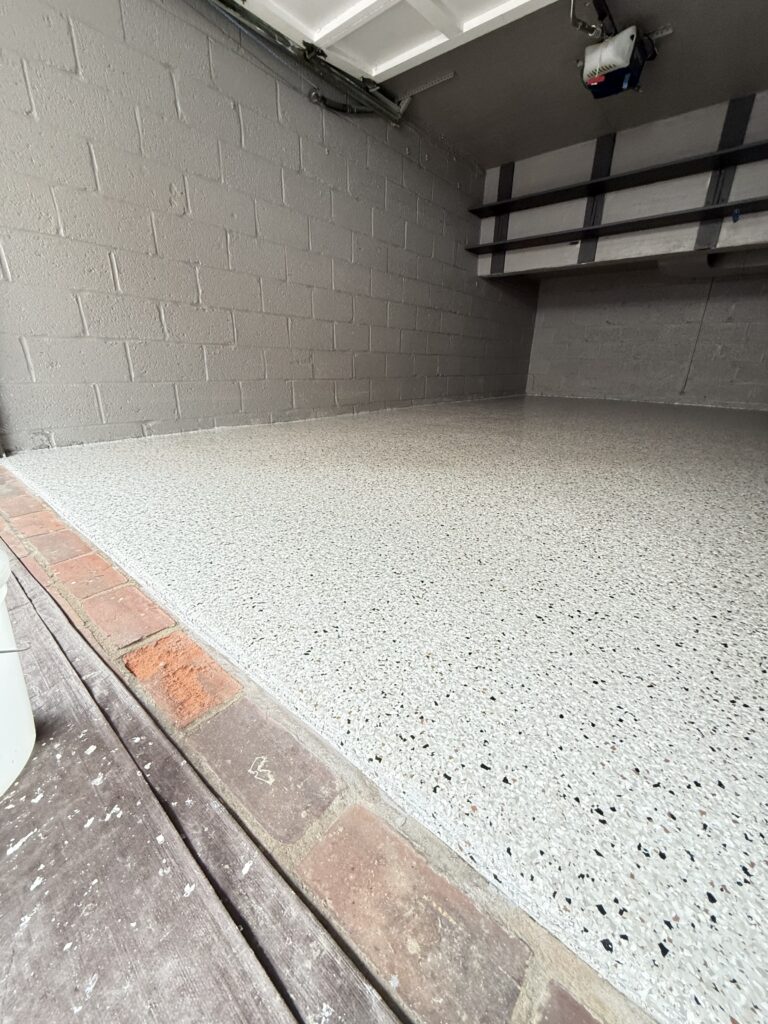
Flake epoxy base + polyurea/polyaspartic finishing layer is our choice. 15-20 years proven under daily tire traffic, gasoline spills, road salt and Philly winters.
Garage floor coatings protect concrete from chemicals, moisture, cracks, and wear while improving appearance. Today, homeowners can choose from various coating types — from simple paints to durable polyurea finishes — depending on durability, cost, and design preferences.
A bare concrete floor might seem durable, but over time it absorbs oil, water, and road salt, leading to stains, cracks, and dusting. Applying a protective coating seals the surface, prevents moisture penetration, and keeps the garage cleaner and brighter.
The choice of garage floor coating depends on concrete condition, usage intensity, budget, and desired lifespan. Professional evaluation guarantees adhesion and long-term results. Here are the primary professional-grade systems available today.
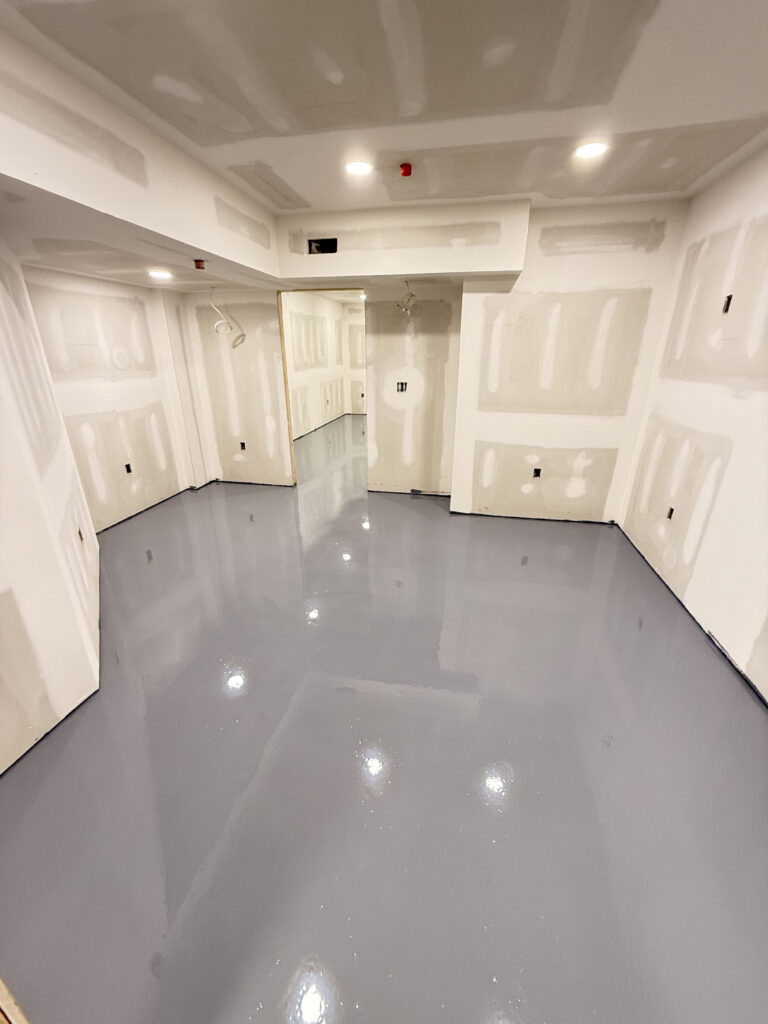
Epoxy creates a seamless, chemical-resistant bond with concrete, offering excellent protection against oils, salts, and abrasion. Installation requires surface preparation but delivers a glossy, durable finish in multiple colors.
Uniform coverage in different colors (light gray, tan, white, orange, black etc.) for a clean, industrial appearance. High durability with simple maintenance. Ideal for functional commercial garages.
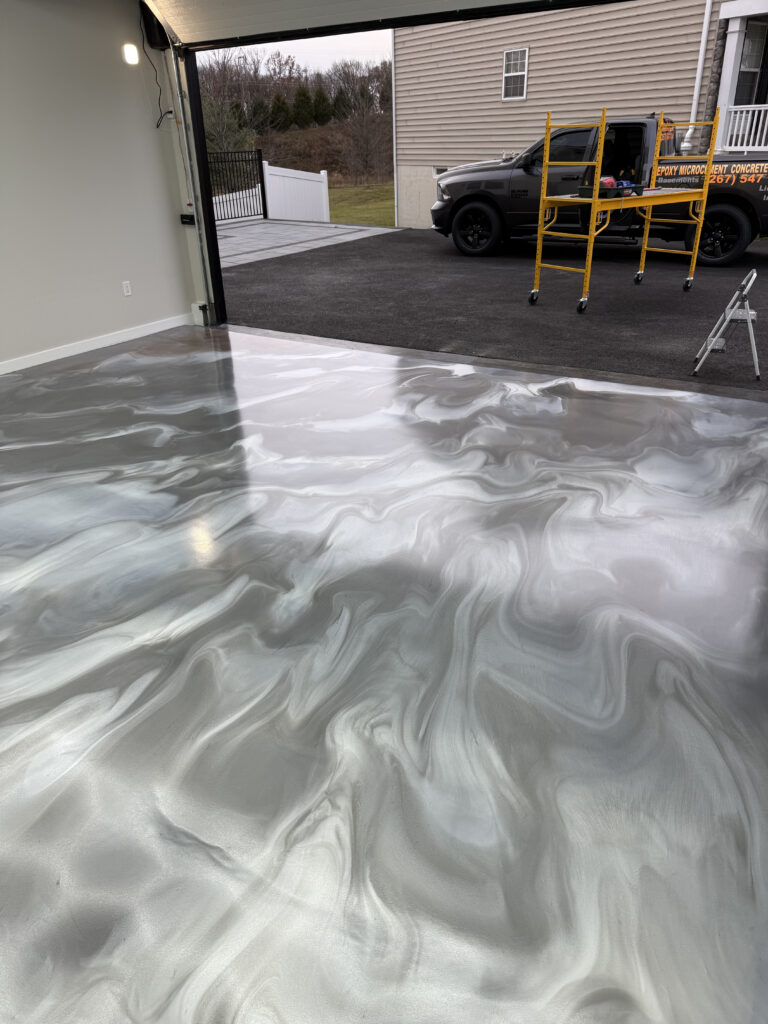
Premium decorative finish with metallic pigments creating depth and shimmer. Combines aesthetics with strong surface protection. Suited for showroom look or design-focused spaces.
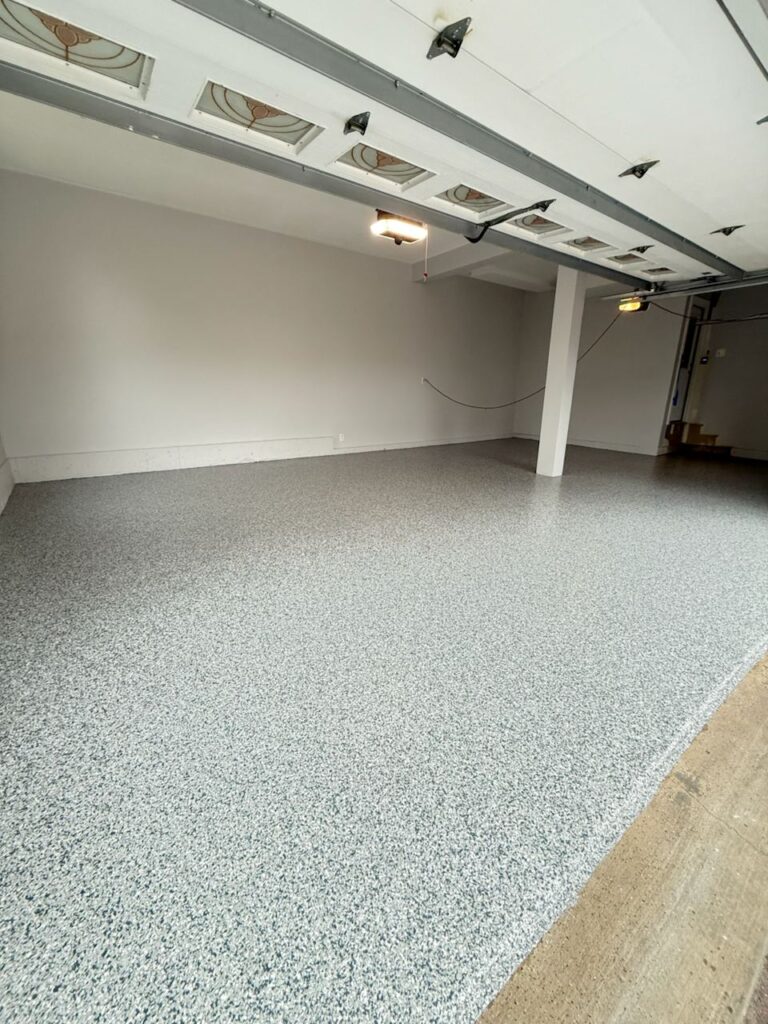
Colored vinyl chips broadcast into epoxy basecoat, providing texture, slip resistance, and defect-hiding. We apply polyurea/polyaspartic finish over flake for enhanced UV protection, flexibility, and durability. This hybrid system delivers the best of both worlds — visual appeal plus industrial strength.
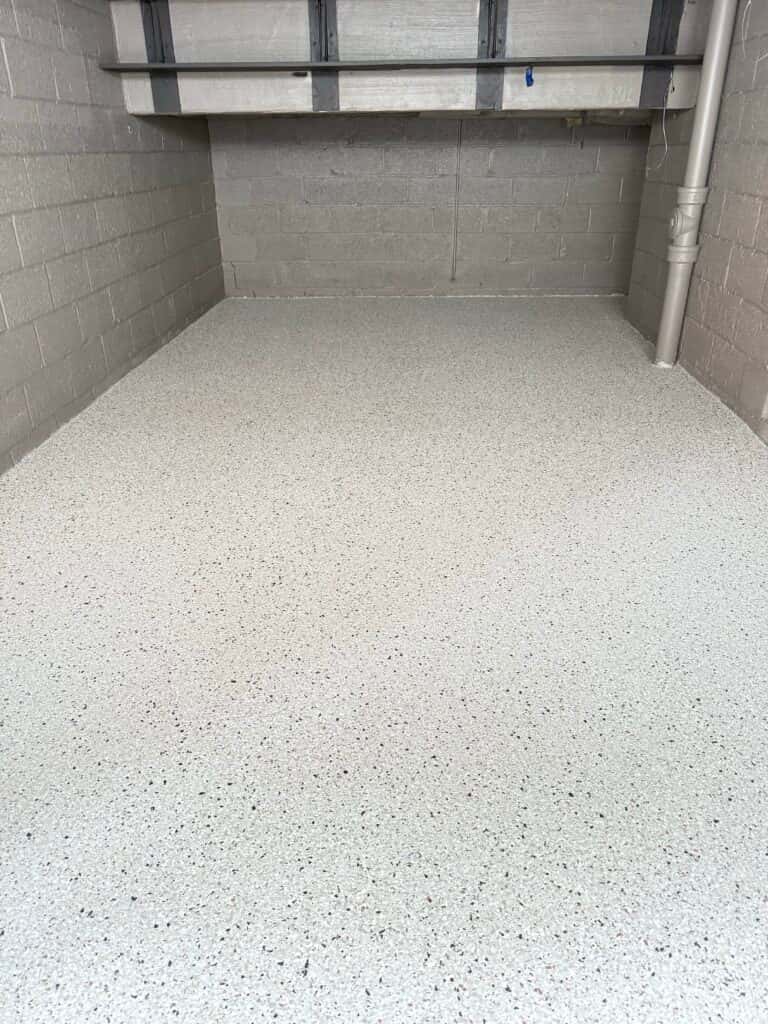
Specialized primer coating that locks out moisture from damp concrete slabs. Penetrates deep into pores, creating a vapor-tight seal that stops dusting, spalling, and adhesive failures. Essential first step for garages with humidity or groundwater issues — budget-friendly foundation for pro epoxy/polyurea systems above.
Dual purpose: Can be used standalone for basic protection or as base layer under flake epoxy/polyurea topcoats.
Available in light gray, dark gray, beige — practical garage colors.
Key results:
Next-generation polymer coatings that cure rapidly (hours, not days) and flex with concrete movement. Superior chemical and impact resistance makes them ideal for high-traffic commercial and industrial garages.
Perfect as a topcoat over epoxy coating for home garages.
Polished concrete involves grinding existing concrete, applying a densifier, then polishing to a smooth finish. Creates dust-proof surface with natural industrial aesthetics and minimal maintenance.
Grind and Seal flooring system takes a similar approach but stops short of high polish: concrete is ground to remove imperfections, then sealed with penetrating sealer rather than achieving mirror shine. More slip-resistant than fully polished floors.
⚠️ Important safety note: Highly polished concrete becomes dangerously slippery when wet. Avoid in regions with snow/ice exposure like Philadelphia, where tracked-in moisture creates slip hazards. Grind and Seal offers safer traction.
Water-based acrylic sealers penetrate concrete moderately well but lack the durability and chemical resistance of epoxy or polyurea systems. They suit temporary protection or low-traffic garages where basic moisture control suffices. Expect reapplication every 2-3 years under normal vehicle use.
Latex or oil-based paints provide the most affordable entry-level finish but significantly underperform compared to resin coatings. They chip easily from tire marks and fail against oils/chemicals. Best as a short-term DIY solution (1-2 year lifespan) while planning a professional upgrade.
Chemical or water-based stains penetrate concrete for permanent color with natural mottling. Decorative rather than protective — best paired with sealers. Creates unique artistic patterns.
|
Coating Type |
Durability (Years) | Cost Level | Installation Time | Slip Resistance | Chemical Resistance |
Best For |
| Solid Color Epoxy |
8-12 |
$$ |
3-4 days |
Good |
Excellent |
Functional garages |
| Metallic Epoxy |
8-12 |
$$$ |
3-6 days |
Good |
Excellent |
Decorative spaces |
| Flake Epoxy + Polyurea/Polyaspartic Topcoat |
12-20 |
$$$ |
2-3 days |
Excellent |
Superior |
High-traffic, professional |
| Pure Polyurea/Polyaspartic |
15-20 |
$$$$ |
1-2 (area-dependent) |
Very Good |
Superior |
Commercial |
| Polished Concrete |
10-15 |
$$$ |
3-7 days (area-dependent) |
Poor (wet) |
Moderate |
Dry indoor spaces |
| Grind and Seal |
6-12 |
$$ |
1-2 days |
Good |
Moderate |
Traction-critical areas |
| Moisture Vapor Barrier |
6-10 |
$ |
1-2 days |
Good |
Basic |
Moisture protection |
| Acrylic Coating |
2-4 |
$ |
1 day |
Fair |
Poor |
Temporary/low use |
| Garage Floor Paint |
1-2 |
$ |
DIY (hours) |
Fair |
Poor |
Short-term budget |
Key factors determine the right coating for your concrete garage floor. Match your needs to system strengths for optimal protection, durability, and cost.
Light storage: Moisture Vapor Barrier or Acrylic Coating.
Daily traffic: Flake Epoxy with polyurea topcoat — best garage solution for tire marks, abrasion, and heavy use.
Budget option: Prep concrete + Moisture Vapor Barrier in basic colors (light gray, dark gray, beige) to block dust and moisture + Topcoat.
Snowy areas (like Philadelphia): Skip Polished Concrete — slippery when wet. Choose Grind and Seal or textured Flake Epoxy.
Humid conditions: Moisture Vapor Barrier as epoxy base.
Paint, Acrylic — DIY, under $200-400/garage, 1-2 years
Epoxy systems + Polyurea/Polyaspartic topcoat — $1,500+ (labor and materials total), 10-15 years
Clean industrial: Solid Epoxy.
Neutral: Epoxy Flake with color chips, Moisture Vapor Barrier (light gray, beige).
Decorative Showroom Look: Metallic Epoxy.
Natural: Polished Concrete, Grind and Seal
For maximum longevity under heavy use, polyurea and polyaspartic lead the pack. These professional-grade solutions flex with concrete movement, resist chemicals, UV damage, and abrasion better than any alternative.
Epoxy-polyurea combo lead in lifespan. Epoxy bonds tight, polyurea adds elasticity against chemicals and impacts.
Cost vs Value: Higher upfront ($8-15/sq ft installed), but lowest lifetime cost per year due to zero reapplication needs.
Flake delamination (“flakes coming off”) occurs when colored vinyl chips peel from garage floors. The main trigger is hot tire pickup — warm tires post-drive soften topcoat, cool and bond tightly, then tear flakes loose upon vehicle movement.
Common Causes:
Prevention (What Professional Systems Do Right):
Critical Pro Tips:
Despite fast-cure marketing, allow 3-5 days for full strength before heavy use. You’ve invested the budget — let the floor fully cure! Early tire traffic risks micro-cracks.
Hot tire resistance built-in: Quality polyurea topcoats handle warm tires without softening. Pros using polyurea topcoats report zero delamination even after 10+ years of daily use.
Systems like Flake Epoxy + Polyurea Topcoat (our specialty) eliminate flake-off risk through industrial-grade layering and proper installation protocols. Many DIY or budget installers skip the robust topcoat — that’s why their flakes fail.
Garage floor coating prices depend heavily on concrete condition and prep work required. Bad concrete needs extra preparation.
|
Coating System |
$/sq ft Installed |
400 sq ft Garage Total |
| Moisture Vapor Barrier | $4-5 | $1,600-$2,000 |
| Epoxy (Solid/Flake) + Polyurea Hybrid | $6-10 | $2,400-$4,000 |
| Metallic Epoxy + Topcoat | $14-18 | $5,600-$7,200 |
| Polished Concrete | $6-12 (depends on grind depth/polish levels) | $2,400-$4,800 |
| Grind and Seal | $5-8 | $2,000-$3,200 |
| Garage Floor Paint (DIY) | $1-2 (materials only) | $400-$800 (+ labor if pro) |
Note: All costs shown are approximate installed prices for reference only. Free site evaluation gives exact cost for your specific garage.
Our Garage Coating Approach Include:
Diamond grinding, crack injection, moisture vapor primer, 100% solids epoxy/polyurea, full flake coverage, pro crew, warranty coverage, and stress-free process.
Garage floor coatings range from short-term paints to long-lasting polyurea systems. Epoxy with flakes and a polyurea finishing layer offers the best balance of durability, traction, and appearance for most garages.
|
Priority |
Recommended System |
| Max Durability | Combo Flake + Polyaspartic/Polyurea top layer |
| Budget Moisture Block | Moisture Vapor Barrier (light gray/dark gray/beige) |
| Design | Metallic Epoxy + durable finish |
| DIY short-term | Garage Floor Paint |
| Non-Slip Natural | Grind and Seal |
Choose your garage floor coating based on usage intensity, climate, budget, and maintenance expectations.
Using professional installation for epoxy and polyurea systems ensures performance for 15+ years.
Free on-site concrete evaluation — we’ll check moisture, cracks, and layout, then quote your ideal system with exact pricing.
Stop researching.
Start protecting your concrete today.
Contact us now!


