Grind and Seal Concrete Flooring Process
Grinding:
- The process begins with grinding the concrete surface using diamond grinding tools. This step can range from a light grind that removes the surface layer of concrete to a more aggressive grind that exposes the aggregate within the concrete.
- The level of grinding depends on the desired finish. For a more industrial look, deeper grinding is used to expose the aggregate.
Repair (if needed):
- After grinding, any cracks or imperfections in the concrete are repaired using a suitable patching compound. This step ensures that the final finish is smooth and uniform.
Sealing:
- Once the grinding is complete, a sealer is applied to the concrete surface. The sealer can be a penetrating, topical, or acrylic-based sealer, depending on the desired finish and usage of the space.
- The sealer protects the concrete from stains, spills, and wear, while also enhancing its appearance. It can be finished to a high-gloss, matte, or satin sheen, depending on preference.
Concrete Exposure Levels in Grind and Seal
One of the most important design factors in grind and seal flooring is how much of the concrete is exposed during grinding. The final look depends heavily on this step.
- Cream Finish
Minimal grinding that keeps the surface smooth and uniform. This finish maintains the most natural concrete look and is common in residential interiors and basements.
- Salt-and-Pepper Finish
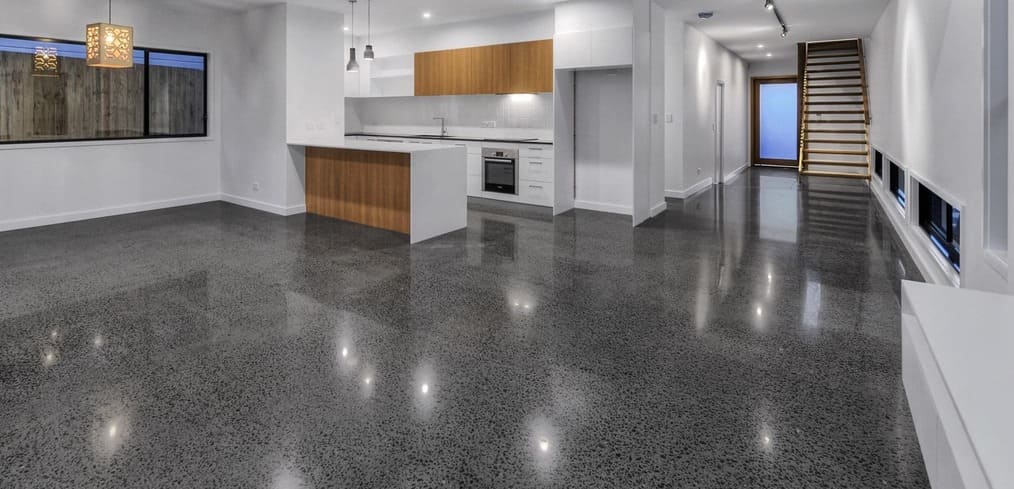
Light exposure of fine aggregate. This is a popular option for commercial spaces, offering visual texture without a heavy industrial feel.
- Full Aggregate Exposure
Less common for grind and seal systems and highly dependent on slab quality. Typically reserved for decorative or design-driven spaces.
Because grind and seal works with the existing slab, results depend on the concrete’s condition, mix design, and installation history.
Why Grind and Seal Is Better Than Bare Concrete
While bare concrete is strong and functional, grind and seal takes the material to a whole new level. Simply put, bare concrete can crack, stain, and dust over time, and it provides very limited visual appeal. Grind and seal addresses these issues in a few key ways:
- Durability: The sealer applied after grinding protects against stains, abrasion, and minor moisture intrusion, making the floor last longer than untreated concrete.
- Aesthetic Improvement: Grinding exposes the natural aggregate or smooth surface, creating a cleaner, more uniform appearance that looks modern and finished.
- Low Maintenance: Unlike bare concrete, which can require frequent cleaning to manage dust or minor chipping, grind and seal floors are easier to clean and maintain.
- Safety: Sealed surfaces reduce dust and can be treated to offer slight slip resistance, which is particularly important in garages, basements, and commercial spaces.
- Repairable: Minor scratches, chips, or cracks can be addressed by re-grinding and resealing, whereas bare concrete often requires patching or full resurfacing.
In short, grind and seal is a heavy-duty, practical improvement over bare concrete, offering both functional and aesthetic benefits. It maintains the natural concrete look while making the floor stronger, safer, and more appealing.
Sealed Concrete vs. Polished Concrete
Sealed and polished concrete floors offer distinct finishes, each with unique benefits and applications.
Sealed Concrete Floors
Sealed concrete involves applying a protective sealer to the surface, creating a barrier that helps prevent moisture and stains from penetrating the concrete. The finish can be matte or glossy, depending on the sealer used, and can be tinted to achieve various colors. Sealed concrete is often chosen for its cost-effectiveness and durability, making it popular for industrial and commercial spaces. It can also be an excellent choice for outdoor areas such as driveways, walkways, and patios, including entryways and porches, due to its ability to withstand environmental exposure. Sealed concrete generally costs less than polished concrete because the application process is simpler.
While grind and seal and polished concrete may look similar at first glance, they serve different purposes.
Polished concrete is a heavy-duty flooring system that relies on densifiers and multiple polishing stages to achieve high gloss and maximum abrasion resistance.
Grind and seal offers:
- A more matte or satin appearance
- Fewer grinding and polishing steps
- Faster installation timelines
- Greater budget flexibility
For clients who want the concrete look without a mirror-like finish, grind and seal is often the smarter choice.
Polished Concrete Floors
Polished concrete floors are achieved through a detailed process using specialized machinery, like diamond grinders and polishers. This process involves multiple stages of grinding and polishing, using progressively finer diamond abrasives to achieve a high-gloss, smooth finish. Polished concrete floors are known for their durability and elegant appearance, making them ideal for residential, commercial, and retail environments. However, due to the complex preparation and specialized equipment required, polished concrete tends to be more expensive than sealed concrete.
Learn more about polished concrete and see if it’s the right fit for your project on our polished concrete page.
How does grind and seal compare to polished concrete?
| Feature |
Grind and Seal |
Polished Concrete |
| Grinding Steps |
1-2 steps (60-80 grit) |
8-12 steps |
| Finish |
Sealed matte/glossy |
High-gloss polish |
| Cost |
Lower (budget option) |
Higher |
| Time |
Faster install |
More time-intensive |
Sealed concrete floors provide a protective coating that prevents moisture and stains and can be customized with various finishes and colors. They are cost-effective and suitable for both indoor and outdoor applications, including driveways, walkways, and porches. Polished concrete floors, on the other hand, offer a high-gloss finish and exceptional durability, often at a higher cost due to the extensive preparation involved. The choice between sealed and polished concrete depends on your specific needs, aesthetic preferences, and budget.
Are grind and seal floors less expensive than polished concrete?
Yes, grind and seal floors are generally more affordable than polished concrete. Polished concrete involves up to 12 steps of grinding and finishing, which can be time-consuming and costly. On the other hand, grind and seal floors require only 1 to 2 grinding steps before sealing, making the process quicker and more efficient. As a result, companies often offer grind and seal options at a lower cost due to the reduced labor and time involved.
Grind and Seal vs Epoxy and Coatings
Epoxy and decorative coatings offer color, texture, and design flexibility, but they behave differently than grind and seal systems.
Grind and seal:
- Maintains a natural concrete appearance
- Does not peel or chip
- Allows the slab to breathe
Epoxy systems:
- Are decorative and customizable
- Create a sealed durable surface layer
Choosing between these systems depends on function, aesthetics, and long-term expectations.
Limitations of Grind and Seal Flooring
While grinded and sealed concrete floor is versatile, it is not the right solution for every project. An experienced contractor will evaluate these factors before recommending the system.
This system may not be ideal if:
- The slab has severe moisture vapor issues
- A high-gloss showroom finish is expected
- The space will experience heavy forklift or industrial traffic
- Exterior exposure is required without specialized sealers
Contact us if you need help!
Who Should NOT Choose Grind & Seal
If you want:
- High-gloss showroom finish → choose polished concrete
- Decorative colors and textures → choose epoxy
- Outdoor durability → choose exterior coatings
That’s why we always help you choose the right system—not just any system.
Moisture Considerations
Concrete moisture is one of the most overlooked factors in flooring performance. While grind and seal systems are more forgiving than coatings, excessive moisture can still affect sealer longevity. In some cases, additional moisture mitigation steps may be recommended before installation.
Benefits of Grinded and Sealed Concrete Flooring System
- Cost-Effective:
Grind and seal flooring is often more affordable compared to full concrete polishing. Polished concrete requires up to 7-9 steps of grinding to achieve a high shine, which adds significant labor costs. In contrast, grind and seal involves fewer steps—typically 1 to 2 grinding stages followed by sealing—which reduces both initial and long-term costs. Additionally, grind and seal floors are highly durable, minimizing the need for repairs or replacements and lowering overall maintenance expenses.
- Faster Installation:
The installation process for polished concrete can take between 7 to 10 days due to its extensive preparation and polishing steps. Grind and seal, however, is quicker, usually completed within 2 to 3 days. This faster turnaround can be beneficial for projects with tight deadlines or for minimizing downtime.
- Stain Resistant:
Grind and seal floors are ideal for high-traffic areas like basements, kitchens, and bathrooms where spills and stains are common. The urethane sealer used in this process is non-porous, preventing liquids and chemicals from penetrating the surface. This makes the floor resistant to water damage and easier to clean, maintaining a cleaner and more hygienic environment.
- Versatile Appearance:
Grind and seal floors can achieve a range of looks, from a matte industrial finish to a glossy, polished appearance. This versatility allows you to tailor the floor’s aesthetic to match the design of your space. Additionally, a satin finish can be applied for those who prefer a less reflective surface while still achieving a sleek look.
- Slip Resistant:
Safety is a key advantage of grind and seal flooring. The process creates a surface with slip-resistant properties, reducing the risk of accidents. This is especially important in areas prone to moisture or spills, providing an added layer of protection for your family or employees.
- Low Maintenance:
Grind and seal floors are easy to maintain. Routine sweeping and occasional resealing are typically sufficient to keep the floor in good condition. The sealed surface resists stains and abrasions, making it a practical choice for both residential and commercial environments.
- Customizable:
The level of grinding and type of sealer can be customized to meet specific aesthetic and functional needs. Whether you want a high-gloss shine or a more subtle finish, grind and seal allows for flexibility in design while still providing a durable and practical flooring solution.
Overall, the grind and seal system offers a budget-friendly, efficient, and versatile flooring solution that combines the appearance of polished concrete with added benefits of durability and ease of maintenance.
Repairability
One of the advantages of grind and seal over coatings and epoxy is easy repair. Because the system works with the slab itself, small cracks, chips, or surface imperfections can be addressed with targeted grinding and resealing rather than replacing an entire coating. This makes grind and seal a long-term practical solution for spaces where minor damage is possible.
Traffic Resistance
Grind and seal concrete floors are highly durable for residential, commercial, and light industrial traffic. The sealer protects against stains and wear while the grinding process strengthens the surface, allowing it to withstand foot traffic, rolling carts, and moderate equipment use. While not as resistant as fully polished concrete in extreme industrial conditions, it is ideal for basements, garages, offices, and retail spaces.
Installation Time
The installation time for grind and seal concrete flooring depends on several factors:
- Size of the space – larger areas naturally take longer to grind and seal.
- Condition of the slab – floors with cracks, uneven surfaces, or previous coatings require extra preparation.
- Desired exposure level – more aggressive grinding to expose aggregate or achieve a specific finish will extend installation.
- Number of sealer coats – some projects call for multiple applications for enhanced durability and aesthetics.
In general, residential basements or garages can often be completed in 1-3 days, while larger commercial spaces may require several days depending on preparation and drying times. Working with a professional ensures the process is efficient and that drying, curing, and maintenance timelines are properly followed.
Maintenance and Care
One of the biggest advantages of grind and seal flooring is ease of maintenance.
Proper care includes:
- Neutral pH cleaners
- Avoiding harsh degreasers or acids
- Periodic resealing depending on traffic level
- Simple spot repairs if damage occurs
Compared to coatings, grind and seal floors are easier to refresh over time without full removal.
Get Professional Guidance
Choosing the right concrete flooring system depends on your space, slab condition, and performance needs. A professional evaluation helps avoid costly mistakes and ensures long-term results.
We are happy to help you choose the right flooring solution for your space.
Call us today to schedule your free on-site consultation and get a no-obligation quote for your project.