



Yes. With the right sealer and UV‑stable finish, stained concrete works beautifully on patios and walkways.

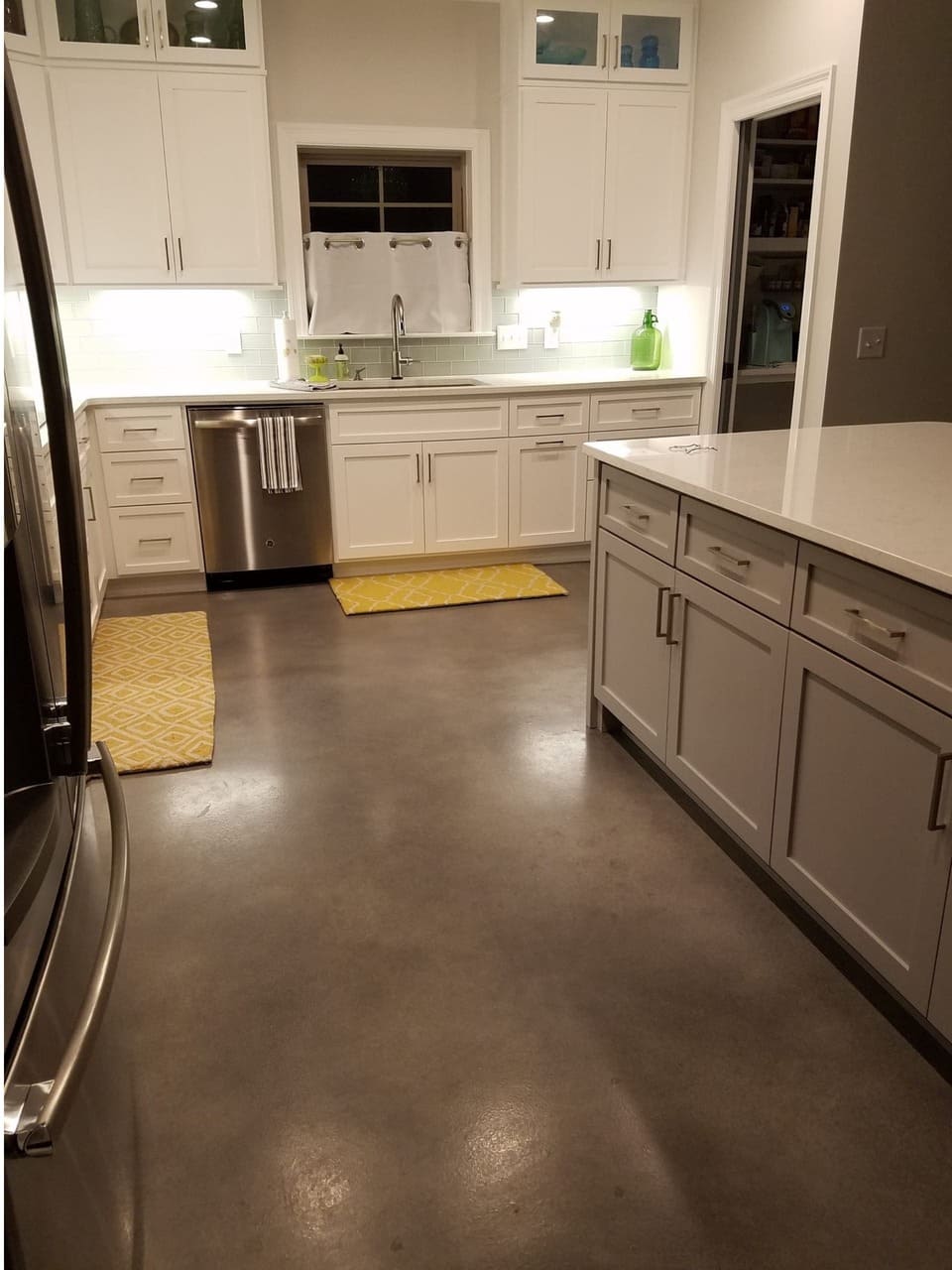


Concrete staining is a popular way to revitalize dull or worn concrete floors by adding color and depth to the surface without covering the concrete itself. Unlike coatings that sit on top of the slab, concrete stain penetrates the concrete pores, creating a long‑lasting, natural, and aesthetically pleasing effect that enhances both residential and commercial spaces.
This decorative concrete solution offers design versatility, improved durability, and a more refined appearance than bare concrete — making it an excellent option for patios, garages, basements, and indoor concrete floors.
Concrete Stain Floors are created through the application of stain to the surface of concrete to achieve a specific color or finish. Compared to simple paint, stains soak into the material, creating a permanent color. The finish not only looks more natural but also won’t peel or fade over time. Unlike traditional flooring, stained concrete is a more durable and cost-effective option. It requires minimal cleaning and enhances indoor air quality due to its environmentally friendly nature. Its versatility allows you to install it both indoors and outdoors.
Concrete stain is ideal for:
It’s especially effective when you want color depth and natural aesthetics without thick coatings or overlays.
Concrete stain is a reactive or non‑reactive coloring system that penetrates into the concrete surface and changes the color from within. It can deliver:
Unlike paint or epoxy coatings, stains don’t peel, chip, or flake because they work with the concrete’s composition rather than covering it.
There are two main types:
These react chemically with the minerals in concrete, creating unique, variegated color effects.
More demanding in application but known for their durability, acid-based stains can give a very special effect to the floor. They produce earth-toned colors that mimic natural stone, making the flooring look expensive. Moreover, the finish is permanent and will last a long time without peeling or chipping.
No two stained concrete floors look exactly alike.
These provide more consistent, solid colors, broader palette choices, and are easier to control for precise design work.
Water-based concrete stains are easy to apply: they penetrate the material and form a translucent color that naturally fits the texture of the concrete. Their availability in an array of finishes provides many options for customization. Additionally, environmentally friendly water-based stains consist of low VOCs.
Concrete stain works best on clean, porous concrete — whether new or old — as it penetrates the slab and integrates into its structure.
Earth Tones: Shades of brown, tan, and beige create a cozy, natural look. A white concrete stain is perfect for achieving a minimalist and contemporary look, while a brown concrete stain can add depth to any setting.
Grays: Ranging from light to dark, grays provide a contemporary, stylish appearance. A gray-stained concrete patio delivers a modern, elegant look that complements contemporary outdoor furniture nicely.
Blues and Greens: Soft blues and greens evoke a peaceful, soothing atmosphere.
Reds and Terracottas: Deep, warm hues bring a rustic, elegant touch.
Black and Charcoal: Strong, striking colors contribute to a modern, industrial feel.
Consider the function of the room when selecting tones. Warmer tones will create a cozy atmosphere, while cooler ones will make a space feel more open. Light colors can brighten a room. Plain material can be transformed into a bright artistic surface with a decorative concrete stain. Applying a stain to a concrete patio can turn a dull, gray area into a lively space ideal for outdoor gatherings. Thanks to the diversity of design choices, you can choose the best concrete stain color that will complement the existing style of any area.
While bare concrete is functional, it can be:
Concrete stain upgrades it by:
✔ Adding permanent, fade‑resistant color
✔ Enhancing depth and visual interest
✔ Hiding minor imperfections
✔ Making concrete feel intentional, not unfinished
✔ Creating a design statement without bulky overlays
In many situations, stained concrete can look as refined as stone or tile, but without the grout lines or high maintenance.
To get the best result from a concrete stain application, there are several critical factors to consider:
Stain penetrates best into porous surfaces. If the concrete:
… the staining may not take evenly.
What to do:
Professional surface preparation (grinding or shot blasting) improves results and ensures consistent color penetration.
Excess moisture affects stain absorption and can cause cloudy or uneven results.
For interior slabs, a moisture test is essential. If high moisture is present, a vapor mitigation system may be needed before stain application.
Stained concrete colors can vary based on:
✔ Type of stain (acid vs water‑based)
✔ Concrete mix and age
✔ Surface preparation and sealing
Pro tip: Always test stains in a small area before full application to verify the expected appearance.
Concrete stain does not seal the floor on its own. After staining:
Proper sealing protects against abrasion, oil, chemicals, and everyday wear — especially outdoors or in garages.
Concrete stain projects vary in time depending on:
✔ Size of area
✔ Surface condition & prep (grinding/shot blasting)
✔ Complexity of color application
✔ Sealer type and number of coats required
Most residential staining jobs can be completed in 1–3 days, but larger or heavily prepared surfaces may take longer. Professional installation helps avoid pitfalls and ensures predictable results.
Periodic sweeping or mopping helps prevent scratches caused by debris. Use a mild, pH-neutral cleaner to avoid damaging the stains. Soft cloths are effective for wiping up spills, while mats can reduce dirt spread, and rugs can provide extra protection.
Sealing: Reapply a sealer periodically to maintain the floor’s protective layer.
Waxing: In high-traffic areas, waxing can extend the floor’s lifespan.
Avoid Abrasives: Avoid abrasive cleaners that could damage the surface.
Furniture Pads: Place pads under furniture legs to preserve the concrete’s condition.
Additional Measures: Conduct periodic inspections for signs of damage and hire professional cleaning services occasionally.
Stained concrete floors offer an excellent combination of durability, versatility, and low maintenance, making them ideal for residential and commercial spaces. Available in a range of colors, from subtle to vibrant, concrete color stains can complement any design style. With consistent cleaning, concrete stain flooring in a patio, basement, garage, porch, kitchen, or any other space can remain attractive and functional over time. They are also a cost-effective choice for outdoor environments, enhancing the visual appeal and providing a robust, low-maintenance flooring solution.
If your project needs more than just stain, consider these systems too:
🔹 Polished Concrete Flooring — a premium, long‑lasting finish
🔹 Grind and Seal Concrete Flooring — a natural concrete look with protective sealing
🔹 Epoxy Coatings & Decorative Systems — color, texture, and heavy‑duty protection
At AD Technology, we specialize in evaluating existing slabs, selecting the right stain type, and executing a professional installation designed to last.
We help you:
✔ Choose the right stain color and finish
✔ Prepare the slab properly
✔ Address moisture or flatness issues
✔ Apply sealers suited to your environment (indoor, patio, garage)
Stained concrete is only as good as its preparation — and experience matters.
Not sure if concrete staining is right for your space? We offer a free professional quote that helps you understand:
👉 Learn how our free quote process works: FREE QUOTE


